

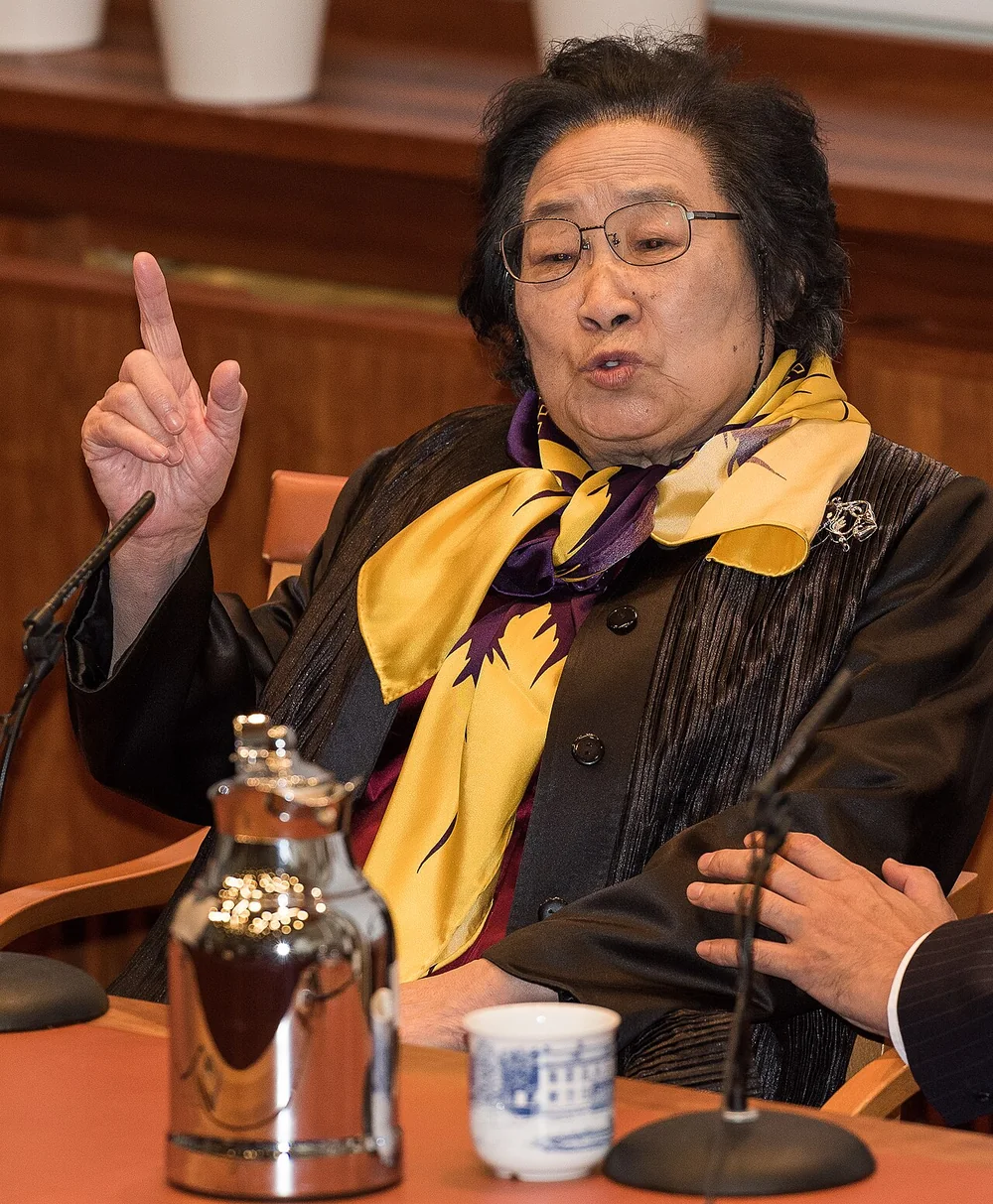
What she actually did
Tu led a unit of Project 523, a secret Chinese military programme to find a treatment for chloroquine-resistant malaria. Her team screened over 2,000 traditional remedies and compiled 640 candidates. Sweet wormwood, Artemisia annua, showed activity but results were erratic. Reading a fourth-century handbook of emergency prescriptions by Ge Hong, Tu noticed the instruction to soak the herb in cold water and wring out the juice — not boil it. She reasoned that heat was destroying the active compound and switched to a low-temperature ether extraction. The result was 100% effective in mice and monkeys. The purified compound, artemisinin, is the basis of the combination therapies that are now the global standard of care for malaria.
Why you have never heard of her
Everything about the work was structured to be anonymous. Project 523 was a military secret; Tu's findings were published without an author's name in 1977. She had no doctorate, no training abroad, and was not a member of either Chinese national academy — she is described in China as the "three-no" scientist. Internationally, artemisinin was known for decades without anybody outside the programme being able to say who had found it. She was sixty-five before her role was documented in the West, eighty when the Lasker Award named her, and eighty-four at the Nobel.
Her life
Tu contracted tuberculosis at sixteen and lost two years of schooling. The experience sent her into medicine: she studied pharmacology at Peking University, graduating in 1955, and then trained for two and a half years in traditional Chinese medicine on top of her Western pharmacology — an unusual combination that turned out to be the whole point.
In 1967, at the height of the Cultural Revolution and the Vietnam War, Ho Chi Minh asked Zhou Enlai for help with malaria that was destroying troops on the Ho Chi Minh trail. Project 523 was set up in secret. In 1969 Tu, then thirty-eight, was appointed to lead her institute's group. She was sent to Hainan to study infected patients. Her husband had been exiled to the countryside; she left her four-year-old daughter with her parents and her elder daughter at a boarding nursery.
The breakthrough came from reading. Ge Hong's Emergency Prescriptions Kept Up One's Sleeve, written in 340 CE, said to steep a handful of qinghao in water, wring out the juice and drink it. No boiling. Tu took that literally as a chemical instruction and changed her solvent.
There were no formal safety trials available, so she volunteered as the first human subject, along with two colleagues. "As head of this research group," she said, "I had the responsibility." They were fine, and clinical trials followed. Tu is the first Chinese Nobel laureate in medicine and the first female citizen of the People's Republic to win a Nobel in any category.
“Every scientist dreams of doing something that can help the world.”— Tu Youyou
Things worth knowing
- The clue was "cold water"Ge Hong's fourth-century text specified soaking, not boiling. Tu read it as a chemistry instruction and switched to low-temperature ether extraction.
- She took the first doseWith no safety data, Tu and two colleagues volunteered as the first human subjects before trials on patients.
- Published with no author's nameThe 1977 paper appeared anonymously because the programme was a military secret.
- The "three-no" scientistNo doctorate, no study abroad, no membership of the Chinese academies — and a Nobel Prize.
- Millions of livesThe WHO estimates artemisinin-based combination therapy has saved millions of lives, mostly children in sub-Saharan Africa.
Timeline
Graduates in pharmacology from Peking University Medical School.
Takes a full course in traditional Chinese medicine alongside her Western training.
Appointed head of her institute's Project 523 group at thirty-eight.
Reads Ge Hong's 340 CE text, switches to cold ether extraction, and gets a 100% effective extract.
Her team isolates pure artemisinin; Tu volunteers as a human test subject.
The work is published anonymously.
Receives the Lasker Award, the first public international recognition of her role.
Awarded the Nobel Prize in Physiology or Medicine at eighty-four.
What it means now
Artemisinin-based combination therapy is the frontline treatment for malaria across the world, and the single largest contributor to the fall in malaria deaths since 2000. Tu's method — take a traditional text seriously enough to read it as a protocol, then test it with modern chemistry — remains an argument worth making about where knowledge comes from.
