

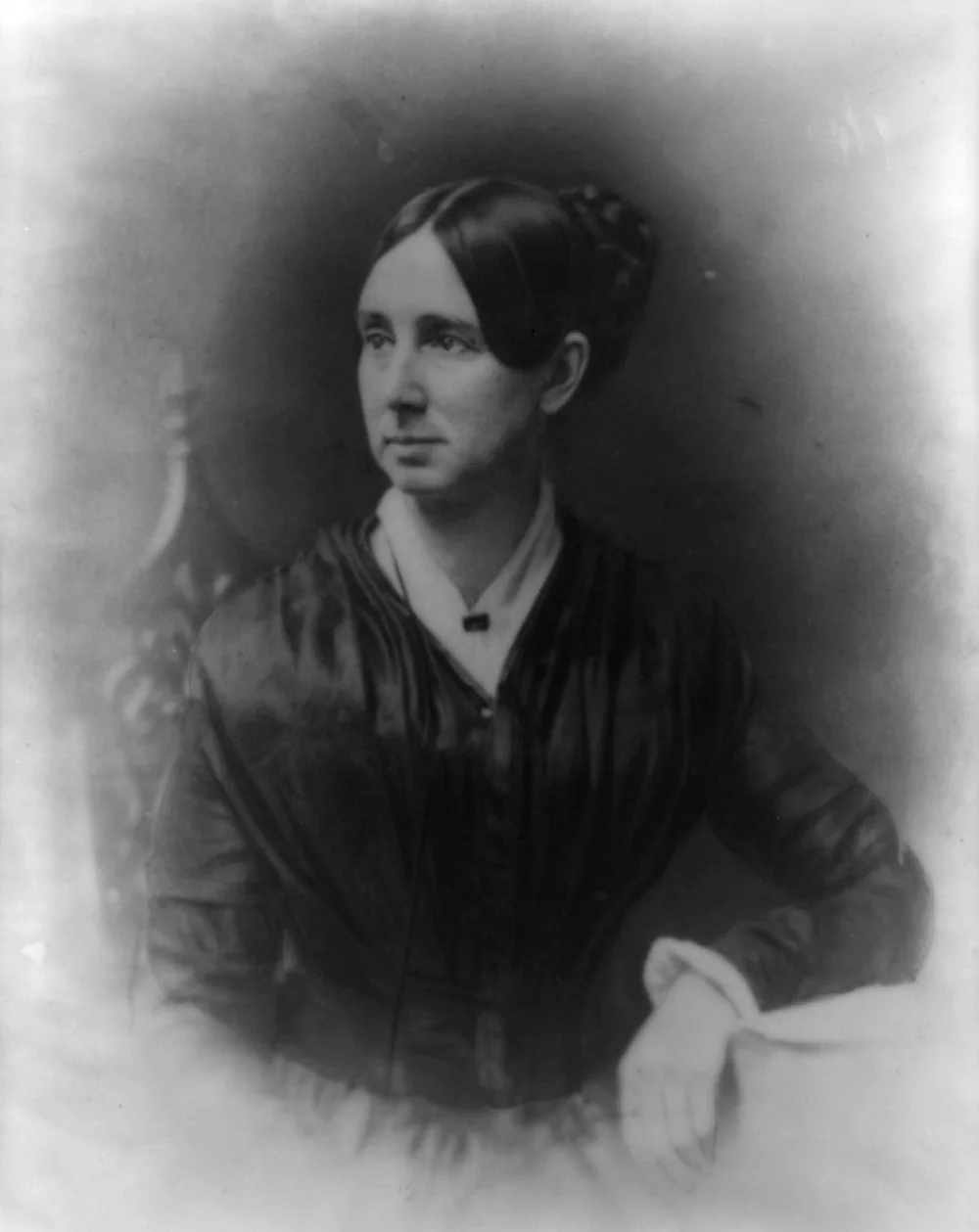
What she actually did
Dix invented a method as much as a cause: go and look, write down exactly what you see, and read it aloud to the people with the power to change it. Between 1841 and 1881 she personally inspected jails, almshouses and poorhouses across more than thirty states and several countries, then converted her notebooks into Memorials — evidence-based petitions to legislatures. Her lobbying produced or expanded more than thirty public mental hospitals in the United States and shaped asylum reform in Britain, Scotland, France, Italy and Japan.
Why you have never heard of her
Dix is remembered, when she is remembered at all, as a Victorian do-gooder with a lamp — a sentimental figure rather than a methodological one. Two things pushed her out of the history of medicine. First, the asylum system she built was later discredited, and the reformer took the blame for what the institutions became fifty years after she left them. Second, her most important work was documentary and political rather than clinical, and the history of medicine has always been written around doctors. She was not a doctor, so she was filed under charity.
Her life
Dix's own childhood was the argument for her life's work. Her father was an itinerant preacher and an alcoholic; she left home at twelve for her grandmother's house in Boston and was running a school for girls by fourteen. Chronic illness — probably tuberculosis — repeatedly broke her health and her career.
In March 1841 she volunteered to teach a Sunday class to women inmates at the East Cambridge jail in Massachusetts. She went down to the basement and found mentally ill women confined in cells that were, in her words, "dark and bare and the air was stagnant and foul", with no heat, because the jailer told her the insane could not feel cold. She did not write a letter of complaint. She spent eighteen months systematically surveying every jail and almshouse in the state.
Her 1843 Memorial to the Legislature of Massachusetts is one of the great pieces of evidence-driven advocacy in American history. "I proceed, Gentlemen, briefly to call your attention to the present state of Insane Persons confined within this Commonwealth," she wrote, "in cages, stalls, pens! Chained, naked, beaten with rods, and lashed into obedience." Every clause was a thing she had seen, in a place she could name. The legislature expanded the state hospital at Worcester.
She then did it again, state by state, for four decades. Her national bill — setting aside over twelve million acres of federal land to fund care for the mentally ill, blind and deaf — passed both houses of Congress and was vetoed by President Franklin Pierce in 1854, on the grounds that welfare was not the federal government's business. It is one of the most consequential vetoes in American social policy. In 1861 she was appointed Superintendent of Army Nurses for the Union and recruited some 3,000 women; she fought the Army surgeons constantly, lost her authority in 1863, and privately judged her war work a failure.
“I proceed, Gentlemen, briefly to call your attention to the present state of Insane Persons confined within this Commonwealth, in cages, stalls, pens! Chained, naked, beaten with rods, and lashed into obedience.”— Memorial to the Legislature of Massachusetts, 1843
Things worth knowing
- She was told the insane cannot feel coldThe East Cambridge jailer's explanation for the unheated cells became the sentence that started a forty-year campaign.
- Her bill lost to a constitutional argumentPierce's 1854 veto of her land bill set a precedent against federal responsibility for social welfare that stood until the New Deal, eighty years later.
- She reformed Britain and Japan tooHer investigation of Scottish madhouses led directly to the creation of the Scottish Lunacy Commission. Her methods were copied as far away as Japan.
- She hired on looks — deliberatelyHer Civil War nurses had to be between 35 and 50, plainly dressed, no jewellery, no cosmetics. She was trying to make it impossible to dismiss women in hospitals as a scandal rather than a workforce.
Timeline
Finds mentally ill women caged in the unheated basement of the East Cambridge jail.
Delivers her Memorial to the Legislature of Massachusetts; the Worcester hospital is expanded.
Surveys every county, jail and almshouse in New Jersey; the state builds its first public asylum.
Her federal land bill passes Congress and is vetoed by President Pierce.
Investigates Scotland's madhouses; the Scottish Lunacy Commission follows.
Appointed Superintendent of Army Nurses for the Union Army; signs up around 3,000 women.
Retires to a private room in the New Jersey State Hospital — the first asylum she founded.
What it means now
Dix spent her last six years in a private room at the New Jersey State Hospital in Trenton — the first asylum she had persuaded a legislature to build. The modern practices of inspecting institutions, publishing what you find, and treating that record as binding evidence all run back through her. So does the uncomfortable truth that a reform can be right and still be captured by the system it creates.
