

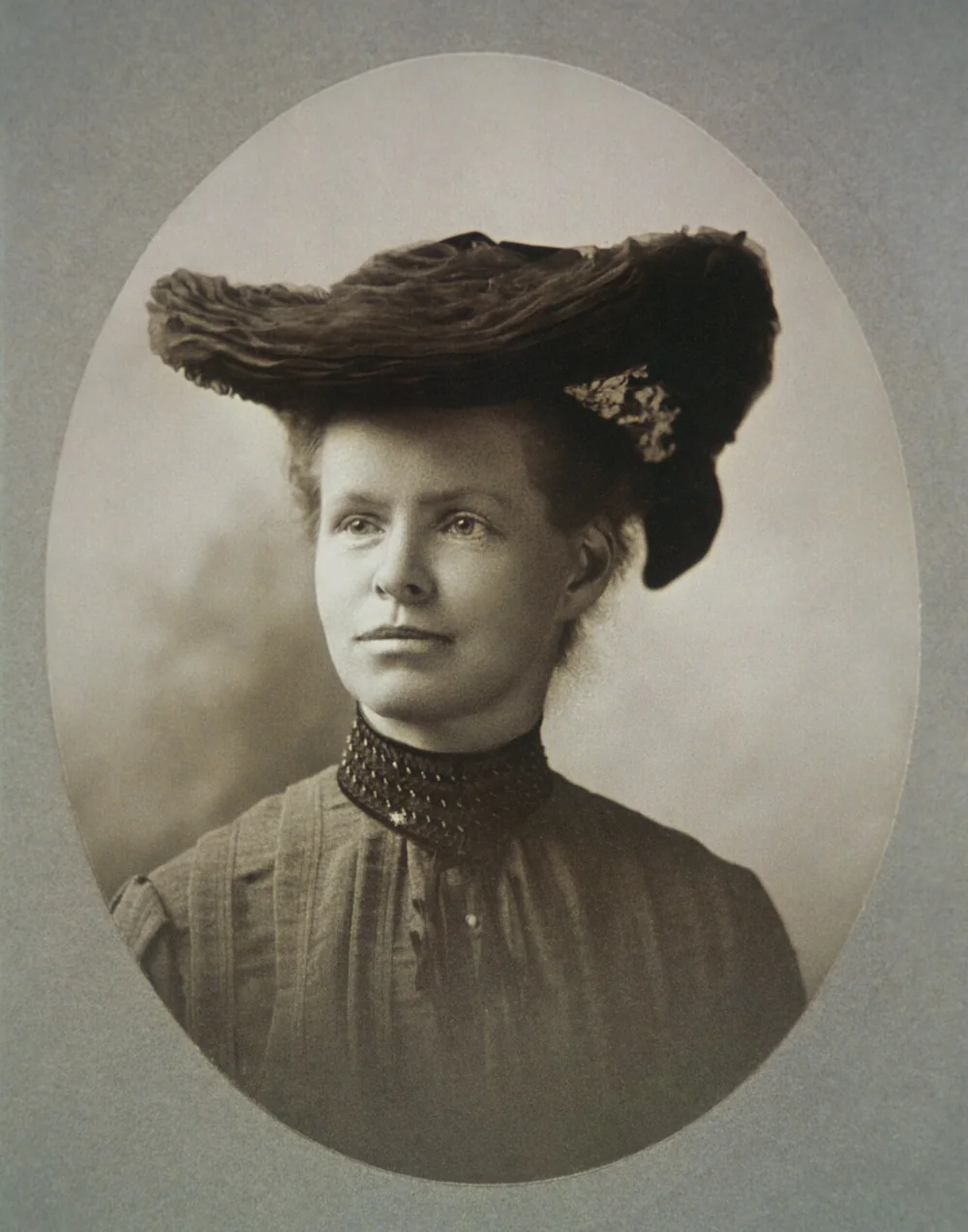
What she actually did
In 1905 Stevens looked at mealworm sperm under a microscope and saw two kinds: one carrying a large chromosome, one carrying a small one. Eggs fertilised by the large-chromosome sperm became female; the small-chromosome sperm produced males. She had found the X and Y chromosomes and proved that sex is determined by inheritance, not by temperature, nutrition or the mother's condition, as almost everyone then believed. It was also the first time anyone had linked a visible difference in chromosomes to a visible difference in an organism — the foundation of the chromosome theory of inheritance.
Why you have never heard of her
Three things buried her. Edmund Beecher Wilson published similar work at nearly the same moment, examining only male tissue, and the credit drifted to him — though Wilson himself later added a footnote acknowledging that Stevens had made the discovery. Thomas Hunt Morgan, her own doctoral supervisor, argued against her interpretation at the time, then absorbed the field and won the 1933 Nobel Prize; in his 1915 textbook he described her results without using her name. And when Morgan wrote her obituary in Science, he allowed her "a share in a discovery of importance" and added that she seemed "at times wanting in that sort of inspiration that utilizes the plain fact of discovery for wider vision."
Her life
Stevens taught school in Vermont and Massachusetts for over a decade, saving money. She did not begin university until she was thirty-five — Stanford, then Bryn Mawr for a doctorate in cytology, which she completed in 1903 at the age of forty-two.
She was extraordinarily fast. In the nine years between her PhD and her death she published around forty papers. Her 1905 monograph Studies in Spermatogenesis, published by the Carnegie Institution, laid out the sex chromosome result. A paper from that year won her a $1,000 prize for the best scientific paper written by a woman.
She was also, quietly, ahead of her own supervisor on methodology: she was breeding and studying Drosophila melanogaster fruit flies in the Bryn Mawr lab before Morgan adopted them as the model organism that would make him famous.
The highest rank she ever held was Associate in Experimental Morphology. Bryn Mawr finally offered her the research professorship she had wanted for years — and the offer arrived just as breast cancer made it impossible to accept. She died in Baltimore in May 1912, aged fifty, nine years after finishing her degree.
“Of the graduate students that I have had during the last twelve years, I have had no one that was as capable and independent in research as Miss Stevens.”— Thomas Hunt Morgan, in a letter of recommendation
Things worth knowing
- She started university at 35Thirteen years of schoolteaching came first. Her entire research career fitted into the nine years after her PhD.
- Her supervisor rated her first — in privateIn a letter of recommendation Morgan wrote: "Of the graduate students that I have had during the last twelve years, I have had no one that was as capable and independent in research as Miss Stevens." He did not say it in his textbook.
- She corrected the reigning theoryClarence McClung had argued the large (X) chromosome determined sex. Stevens showed it was the small one — the Y. Morgan's obituary of her claimed she had confirmed McClung. She had refuted him.
- She was not invited to speakIn 1906 Morgan and Wilson were invited to a conference to present the sex-determination theory. Stevens, who had discovered it, was not on the programme.
- She didn't name X and YThe letters came later. She simply described the large and the small chromosome and worked out what they did.
Timeline
Enrols at Stanford University at thirty-five after thirteen years of schoolteaching.
Receives her PhD from Bryn Mawr College, supervised by Thomas Hunt Morgan.
Publishes Studies in Spermatogenesis, identifying the sex chromosomes in Tenebrio mealworms.
Morgan and Wilson present the sex chromosome theory at a conference she is not invited to.
Awarded the Alice Freeman Palmer Fellowship; returns to Naples and Würzburg to research.
Offered a research professorship at Bryn Mawr; dies of breast cancer before she can take it.
Morgan receives the Nobel Prize for work built on the chromosome theory of inheritance.
What it means now
Every prenatal test, every karyotype, every sentence that begins "XX or XY" descends from what Stevens saw in a mealworm in 1905. Her case is the textbook example of how a discovery survives while the discoverer does not: the fact entered biology immediately, and the name took a century to follow it.
