

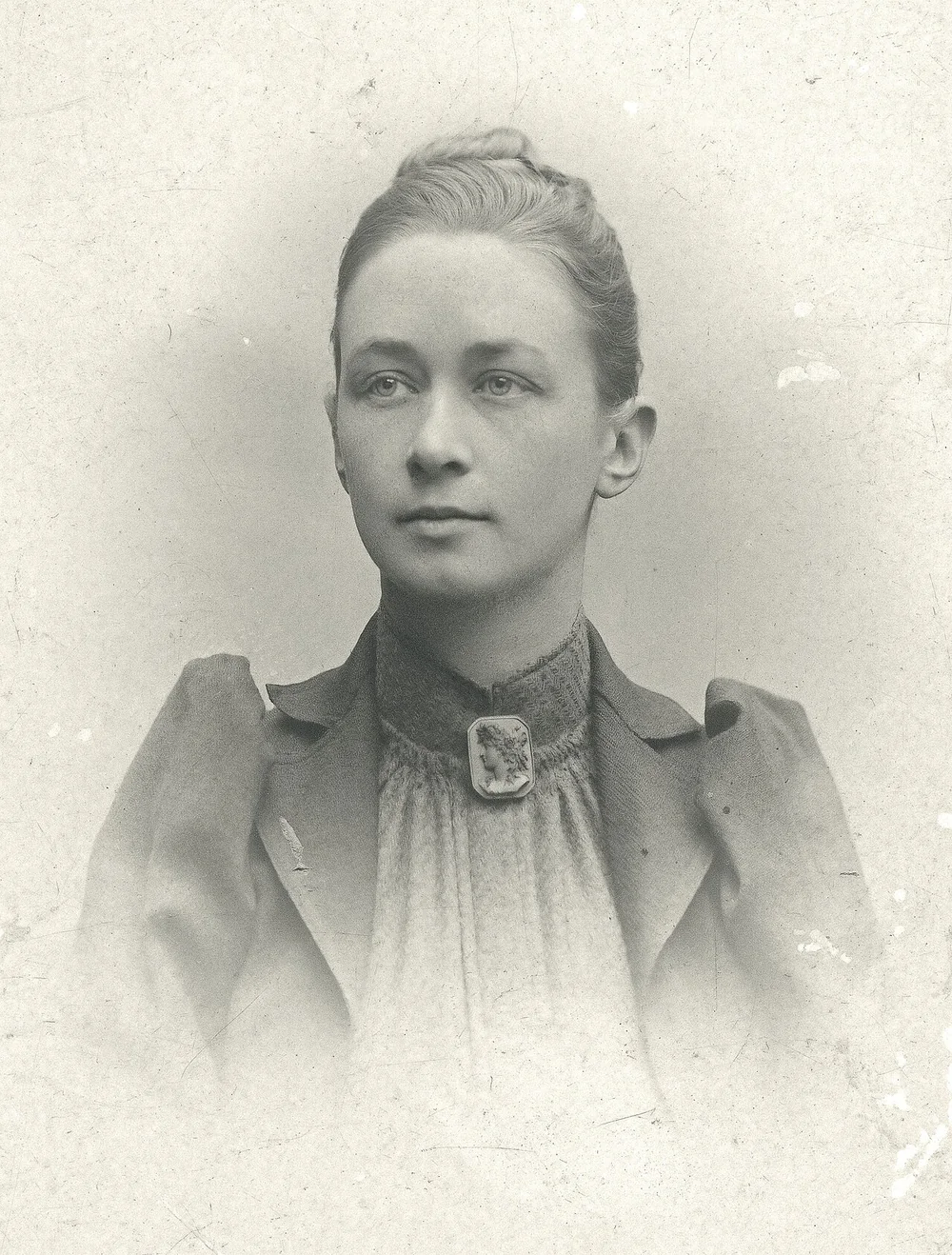
What she actually did
Between 1906 and 1915 af Klint produced The Paintings for the Temple, 193 works of pure abstraction: vast fields of colour, spirals, botanical diagrams of nothing that exists, canvases over three metres tall painted when she was in her forties. A substantial body of it predates the first purely abstract compositions by Kandinsky, Malevich and Mondrian — the three men the standard history of art credits with inventing abstraction. She also worked at a scale and in a series-based, installation-minded way that nobody would attempt again until the 1960s.
Why you have never heard of her
Af Klint removed herself. Convinced the world was not ready, she stipulated in her will that her abstract work stay sealed for twenty years after her death. More than 1,200 paintings and 125 notebooks went into storage. When the boxes were finally opened in the 1960s, the Moderna Museet in Stockholm turned down the bequest. She was excluded from the landmark 1986 exhibition that first told the story of abstraction and spirituality, on the grounds that her work was mysticism rather than art. The deeper problem was that admitting her would require rewriting the founding myth of modernism — and that myth had three men's names on it.
Her life
Af Klint was professionally trained and professionally successful in an entirely conventional way. She was admitted to the Royal Academy of Fine Arts in Stockholm at twenty, graduated with honours, won a studio in the Academy's building in the centre of the city, and made a living from portraits, landscapes and botanical drawing. That was her public career, and she kept it running for decades.
Privately, after the death of her younger sister in 1880, she turned to spiritualism. With four other women — the group called De Fem, The Five — she held séances and made automatic drawings. In 1906, at forty-four, she began The Paintings for the Temple, which she described as executed under guidance from what she called the High Masters.
It is easy for a modern viewer to let the mysticism obscure the work. The paintings themselves are rigorous: colour-coded systems, recurring symbols with stated meanings, swans and spirals and seed forms worked through variation after variation. The ten vast canvases of The Ten Largest, painted in forty days in 1907, map a human life from infancy to old age in pure abstract form.
She showed the work to Rudolf Steiner in 1908 and he was unenthusiastic; she stopped painting for four years. She resumed, finished the cycle in 1915, and spent the rest of her life producing watercolours and filling 150 notebooks. She died in 1944 after a traffic accident, and her nephew inherited the crates.
“The pictures were painted directly through me, without any preliminary drawings, and with great force.”— Hilma af Klint, notebooks
Things worth knowing
- Ten huge canvases in forty daysThe Ten Largest, each about 3.2 by 2.4 metres, were painted on paper in a sustained burst in 1907 — an output that would be remarkable for a muralist with a team.
- Stockholm's modern art museum said noThe Moderna Museet declined the bequest when it was offered. The collection is now held by a dedicated foundation, and her exhibitions sell out worldwide.
- The Guggenheim's biggest show everHilma af Klint: Paintings for the Future (2018–19) drew more than 600,000 visitors — the highest attendance of any exhibition in the museum's history.
- She designed a building for themThe paintings were meant to hang in a spiral temple she imagined but never saw built. In 2018 they hung in a spiral building she never knew about — Frank Lloyd Wright's Guggenheim rotunda.
Timeline
Admitted to the Royal Academy of Fine Arts, Stockholm; graduates with honours and a studio.
Begins regular séances and automatic drawing with De Fem, The Five.
Paints her first abstract series, at forty-four — ahead of Kandinsky's first non-objective work.
Completes The Ten Largest in roughly forty days.
Finishes The Paintings for the Temple: 193 works.
Dies, leaving instructions that the abstract work remain unseen for twenty years.
Shown publicly in Los Angeles — and excluded from the canon as 'mystical' rather than modernist.
The Guggenheim retrospective becomes the most-attended show in the museum's history.
What it means now
Af Klint forces an uncomfortable question about how art history gets written: she was not hidden by anyone but herself, and the field still took more than fifty years after the boxes opened to look properly. Every major survey of abstraction published since 2019 has had to be rewritten around a Swedish woman painting spirals in a Stockholm studio in 1906.
