

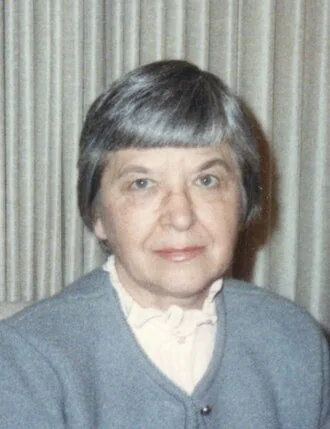
What she actually did
In 1965 Kwolek was working on aramids — aromatic polyamides — looking for a fibre that could reinforce tyres. She produced a solution that was thin, cloudy and opalescent instead of clear and syrupy. Conventional wisdom said a solution that looked like that was a failed polymerisation. Kwolek recognised it as something else: the molecules were lining up like matchsticks in a box, a liquid crystalline phase nobody had made before. Spun into fibre, poly-p-phenylene terephthalamide proved stiffer and stronger than anything then known — five times the tensile strength of steel by weight, and it would not break. DuPont called it Kevlar.
Why you have never heard of her
Kwolek signed the Kevlar patent over to DuPont, as corporate research chemists do, and received no royalties from a product that became a global industry. Once management understood what she had, they assigned a whole group to it; she was moved along, and her role in practical development was limited. She spent her entire forty-year career as a bench researcher without ever being promoted out of it. The broader pattern is the familiar one in industrial science: the invention is credited to the company, and the inventor survives as a footnote in a corporate history.
Her life
Kwolek's father, a Polish immigrant and amateur naturalist, took her into the woods and taught her to look closely; he died when she was ten. Her mother sewed, and Kwolek spent her childhood making clothes for her dolls — an obsession with fabric that turns out to be relevant.
She graduated in chemistry from the Carnegie Institute of Technology in 1946 and took a job at DuPont intending to save money for medical school. The polymer work was more interesting than she expected, and she never left. In 1959 she won an American Chemical Society publication award for "The Nylon Rope Trick", a method of making nylon in a beaker at room temperature that is still a staple classroom demonstration.
The Kevlar story turns on a refusal. The technician who ran the spinneret, Charles Smullen, did not want to put her cloudy solution through the machine — he thought it would clog. She persuaded him. When the fibre came out and would not break, she had the sense to know that an unexpected result is not the same as a mistake.
She filed twenty-eight patents over forty years and contributed to Nomex, Lycra and Kapton as well as Kevlar. She retired in 1986 and spent much of her later life encouraging girls into chemistry. In 1995 she became the first woman to receive DuPont's Lavoisier Medal — and remained the only one for many years.
“I don't think there's anything like saving someone's life to bring you satisfaction and happiness.”— Stephanie Kwolek
Things worth knowing
- Everyone else would have binned itA cloudy, low-viscosity polymer solution was the classic sign of a failed reaction. Kwolek asked for it to be filtered and spun instead.
- Five times stronger than steel, by weightAnd it does not rust, melt at ordinary temperatures, or conduct electricity.
- She earned nothing from itThe patent went to DuPont. Kevlar is a multi-billion-dollar product line; Kwolek drew a salary.
- The Nylon Rope TrickHer 1959 classroom demonstration — pulling a continuous nylon thread out of a beaker at room temperature — is still performed in schools worldwide.
- It is in body armour, and also in bridgesKevlar is used in vests, helmets, tyres, fibre-optic cable, aircraft, boat hulls, brake pads, suspension bridge cables and oven gloves.
Timeline
Joins DuPont as a temporary job to fund medical school; stays forty years.
Publishes "The Nylon Rope Trick" and wins an American Chemical Society publication award.
Her work on poly-m-phenylene isophthalamide yields Nomex, a flame-resistant fibre.
Produces the cloudy liquid crystalline solution that becomes Kevlar.
Kevlar is introduced commercially.
Retires after filing twenty-eight patents; continues as a consultant.
First woman to receive DuPont's Lavoisier Medal; inducted into the National Inventors Hall of Fame.
Inducted into the National Women's Hall of Fame.
What it means now
Kevlar vests are credited with saving more than 3,000 police officers' lives in the United States alone. Kwolek's real contribution, though, is a habit of mind: the willingness to look hard at a result that appears to be a failure. Liquid crystalline polymers became an entire field of chemistry because one researcher did not throw out the cloudy jar.