

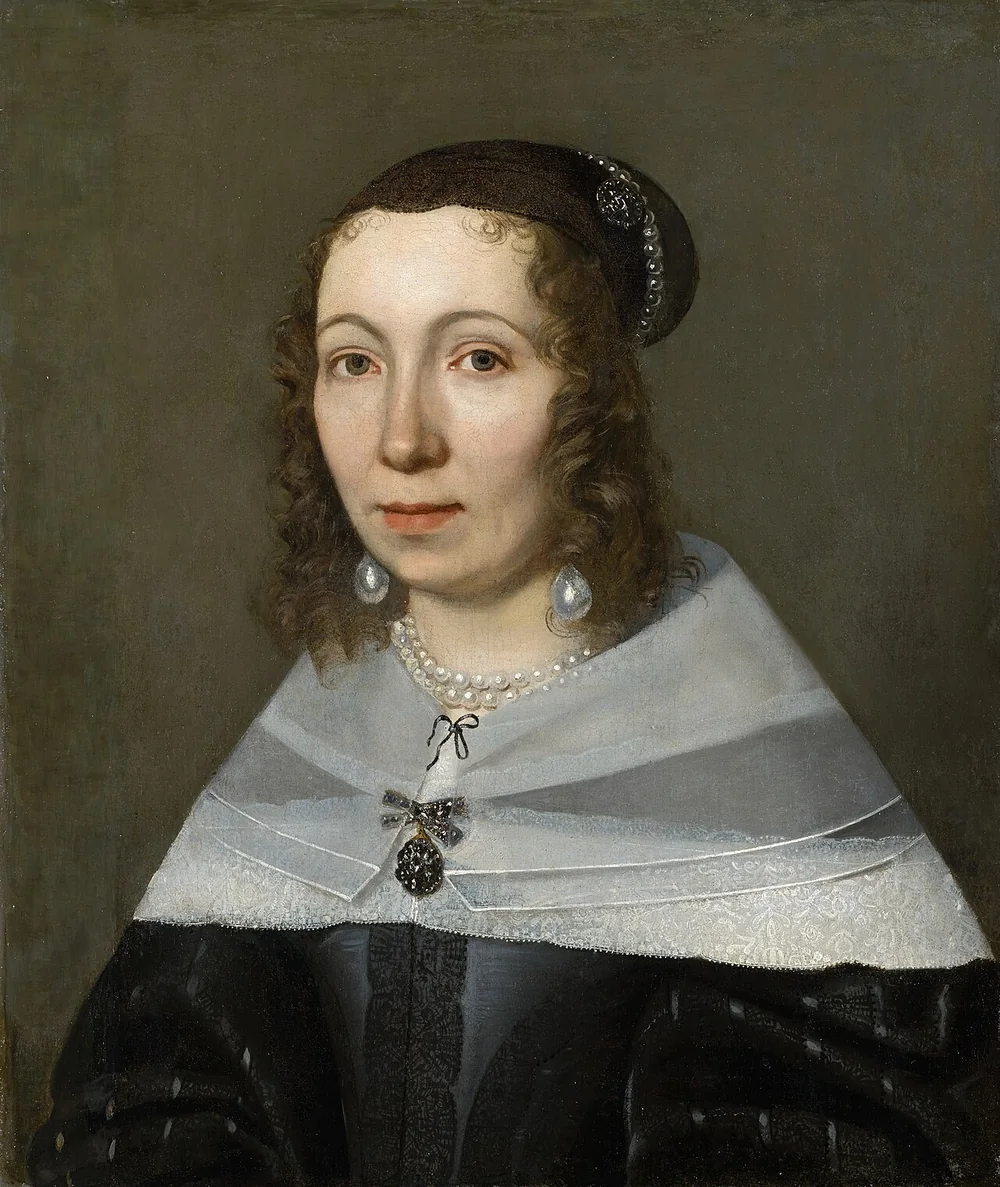
What she actually did
Merian was the first European naturalist to study living insects through their entire life cycle rather than pinning dead ones in a cabinet. By raising caterpillars herself and painting each stage — egg, larva, pupa, adult — on the specific plant the creature actually ate, she demolished the prevailing belief that insects spontaneously generated out of rotting matter. Her 1705 masterwork, Metamorphosis Insectorum Surinamensium, documented sixty tropical species in the field and invented what we would now call ecological illustration: the organism drawn with its food plant, its predators and its timing, all on one page.
Why you have never heard of her
Merian's problem was that she was filed under the wrong heading. Because she painted beautifully, later scholars read her as an artist who dabbled in bugs — a flower painter with a hobby. Nineteenth-century naturalists compounded this by attacking small errors in her Suriname plates and quietly dropping her from the scientific lineage, even as Linnaeus relied on her work to name dozens of species. Her books were reclassified from science to decorative art, and for roughly two hundred years she survived in museum print rooms rather than in the history of biology.
Her life
Merian was born in Frankfurt into a family of engravers and printers. Her father died when she was three; her stepfather, the still-life painter Jacob Marrel, handed her brushes. She painted her first insects at thirteen, from specimens she caught herself — and she was already doing the thing nobody else was doing, which was keeping them alive long enough to see what they turned into.
She married, had two daughters, ran a business selling paints and pigments, and published a two-volume study of European caterpillars. Then, in her forties, she left her husband, moved to Amsterdam, and joined a radical religious community. In 1699, the city granted her permission to sail for the Dutch colony of Suriname. She was fifty-two, travelling with her younger daughter, funded not by a patron or a trading company but by selling 255 of her own paintings. No European woman had done anything like it.
For two years she worked in the rainforest, sketching, dissecting, breeding and recording. She wrote down the names Indigenous and enslaved people used for the plants and what they used them for — and she said plainly in print that the colonists cared about nothing but sugar: "the people there have no desire to investigate anything like that; indeed they mocked me for seeking anything other than sugar in the country." She also condemned the merchants' treatment of enslaved people, while herself depending on the forced labour of an enslaved assistant — a contradiction her modern biographers do not look away from.
Malaria drove her home in 1701. Four years later she published Metamorphosis Insectorum Surinamensium, hand-coloured, enormous, and unlike anything in print. She died in 1717, listed in the Amsterdam register as a pauper.
“The people there have no desire to investigate anything like that; indeed they mocked me for seeking anything other than sugar in the country.”— Maria Sibylla Merian, on the colonists of Suriname
Things worth knowing
- She funded her own expeditionNo company, no crown, no husband. She sold 255 paintings to pay for the voyage — the first self-financed scientific expedition by a woman, and one of the first by anyone purely for research rather than profit.
- Peter the Great bought her upThe Russian tsar's agent purchased a large collection of her watercolours shortly after her death. That is why some of the finest Merians in the world sit in St Petersburg.
- Linnaeus used herThe father of modern taxonomy drew on her plates to name around a hundred species. Her observations entered the scientific record under other people's binomials.
- Germany put her on the moneyHer portrait appeared on the 500 Deutsche Mark note and on a German postage stamp — honoured as a national figure at home long before she was restored to the history of science.
Timeline
Aged thirteen, paints her first insect studies from live specimens she has collected.
Publishes the first volume of Der Raupen wunderbare Verwandelung — the wondrous transformation of caterpillars.
Leaves her marriage and moves to Amsterdam, supporting herself by painting and selling specimens.
Sails for Suriname at fifty-two with her daughter Dorothea, funded by selling 255 of her own works.
Returns to the Netherlands, ill with what was probably malaria.
Publishes Metamorphosis Insectorum Surinamensium, sixty plates of tropical life cycles.
The 300th anniversary of her death prompts major exhibitions and a reappraisal of her as a scientist, not a decorator.
What it means now
Every field guide that shows you a butterfly next to the plant it feeds on is working in Merian's format. David Attenborough has named her among the most significant contributors to entomology. The idea that an organism must be drawn in relationship — to its food, its predators, its season — is so basic to modern ecology that we have forgotten someone had to think of it first.
