

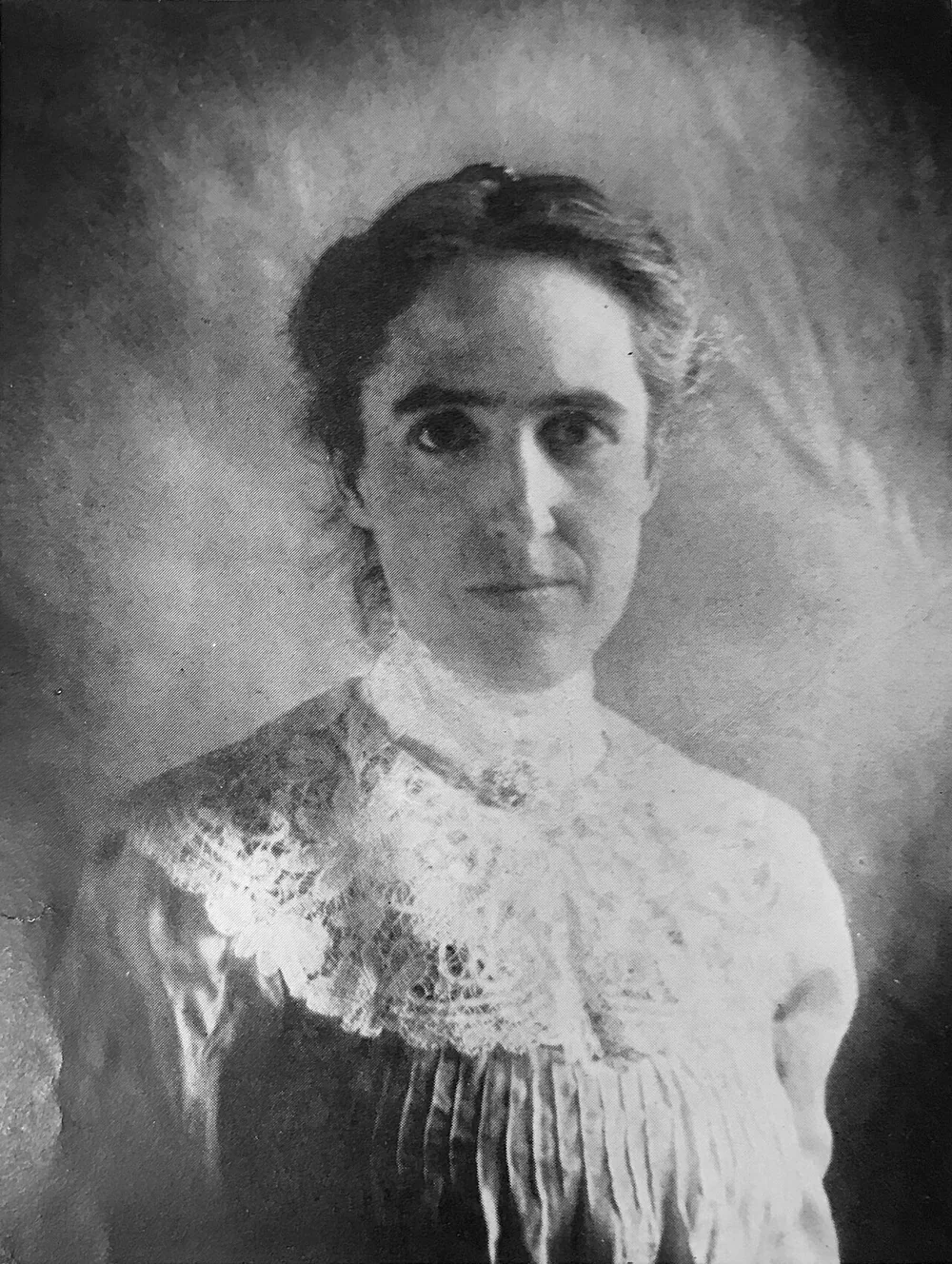
What she actually did
Leavitt noticed that among Cepheid variable stars in the Small Magellanic Cloud, the brighter a star was, the longer it took to pulse. Because every star in that cloud is at roughly the same distance from Earth, differences in apparent brightness had to reflect real differences in intrinsic brightness. That gave astronomy its first standard candle: find a Cepheid, time its pulse, and you know how luminous it truly is — and therefore how far away it is. Leavitt's Law converted the night sky from a flat picture into a measurable three-dimensional space.
Why you have never heard of her
Leavitt was a "computer" — one of the women Edward Pickering hired at Harvard to measure photographic plates at a fraction of a man's wage, and who were not permitted to operate the telescopes. Her landmark 1912 paper was signed by Pickering; only the first sentence, "The following statement regarding the periods of 25 variable stars in the Small Magellanic Cloud has been prepared by Miss Leavitt", records whose work it was. Pickering kept her on cataloguing duties rather than letting her pursue the implications. She received no promotion, no professorship, and for decades her name appeared in textbooks, if at all, as an assistant.
Her life
Leavitt studied at what became Radcliffe College, took an astronomy course in her final year, and joined the Harvard College Observatory in 1893 as a volunteer. She was financially independent, so at first Pickering did not have to pay her at all. Later she earned thirty cents an hour.
An illness contracted while travelling in Europe left her progressively deaf. She worked alongside Annie Jump Cannon, who was also deaf, in a room full of women bent over glass plates with magnifying loupes.
Her assignment was the variable stars of the Magellanic Clouds, photographed from Harvard's station in Arequipa, Peru. She identified 1,777 of them. In 1908 she published the catalogue and noted, almost in passing, that the brighter variables had the longer periods. In 1912 she took twenty-five of those Cepheids, plotted magnitude against the logarithm of period, and found a straight line.
She died of cancer in 1921, aged fifty-three. Four years later the Swedish mathematician Gösta Mittag-Leffler wrote to Harvard intending to nominate her for the Nobel Prize in Physics, and had to be told she had been dead since 1921. The Nobel is not awarded posthumously.
“A straight line can be readily drawn among each of the two series of points… thus showing that there is a simple relation between the brightness of the Cepheid variables and their periods.”— Henrietta Swan Leavitt, 1912
Things worth knowing
- 1,777 variable starsShe found and catalogued them by eye, comparing photographic plates taken on different nights — a task now done by software.
- Thirty cents an hourRoughly $10.75 in today's money. Her weekly pay was $10.50. The men who used her results had salaries and telescope time.
- Hubble credited her publiclyEdwin Hubble used Leavitt's Law to prove Andromeda lies far outside the Milky Way, settling the Great Debate about the size of the universe. He reportedly said she deserved a Nobel Prize.
- A Nobel nomination arrived four years lateGösta Mittag-Leffler began drafting a nomination in 1925, unaware she had died in 1921.
- Her law still worksThe Cepheid period–luminosity relation remains a rung on the cosmic distance ladder and is part of how we measure the expansion rate of the universe today.
Timeline
Joins the Harvard College Observatory as an unpaid volunteer computer.
Hired by Pickering to measure and catalogue stellar brightness, at thirty cents an hour.
Publishes her catalogue of 1,777 variable stars and notes the brightness–period pattern.
Publishes the period–luminosity relation. The paper is signed by Pickering.
Dies of cancer at fifty-three, still a staff computer.
Hubble identifies Cepheids in Andromeda and uses Leavitt's Law to prove it is a separate galaxy.
Mittag-Leffler attempts a Nobel nomination and learns she has been dead four years.
What it means now
The expanding universe, the age of the cosmos, dark energy — all of it is calibrated on a relationship a deaf woman found in a room of glass plates for thirty cents an hour. The asteroid 5383 Leavitt and a crater on the Moon are named for her. She never saw a galaxy through a telescope.
