

What she actually did
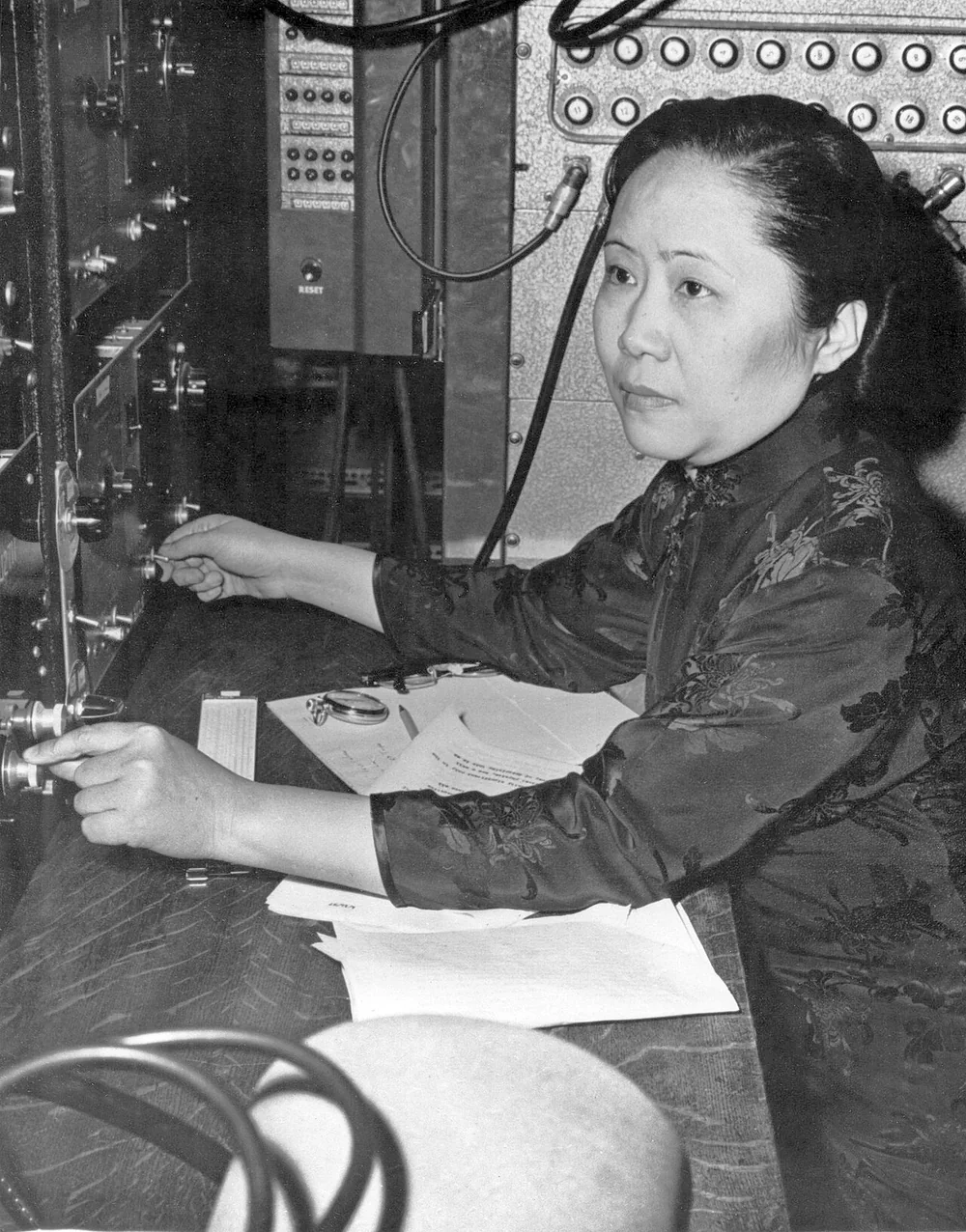
In 1956 Tsung-Dao Lee and Chen-Ning Yang suggested on paper that the law of conservation of parity — the principle that physics is indifferent to mirror reflection — might fail for the weak nuclear force. It was a theory with no experiment behind it, and most physicists thought testing it was a waste of time. Wu designed and ran the experiment: cobalt-60 nuclei cooled to within a hundredth of a degree of absolute zero and aligned in a magnetic field, so she could see whether their decay electrons came out symmetrically. They did not. Parity was violated. One of the deepest assumed symmetries of nature was simply wrong, and the result arrived over Christmas 1956 and was confirmed in January 1957.
Why you have never heard of her
The 1957 Nobel Prize in Physics went to Lee and Yang, awarded with unusual speed, for the idea. Wu, who had done the work that turned the idea into physics, was not included. Wolfgang Pauli had bet money against the result; Richard Feynman had too. The committee's distinction between theory and experiment was not applied consistently in other years. Wu was awarded the first-ever Wolf Prize in Physics in 1978, more than two decades later, in what was widely read as a correction.
Her life
Wu's father founded a school for girls in Liuhe specifically so that his daughter and others like her could be educated. She went from there to a teachers' college, to National Central University in Nanjing, and in 1936 to Berkeley, where she worked with Ernest Lawrence and Emilio Segrè. Luis Alvarez called her the most talented experimental physicist he had ever met; Lawrence said she would make any laboratory shine.
Her 1940 thesis covered bremsstrahlung and the radioactive xenon isotopes produced by uranium fission. That obscure second half turned out to matter enormously. In 1944 the brand-new B Reactor at Hanford kept mysteriously starting and stopping. Fermi and Wheeler suspected a fission product was poisoning the chain reaction. Segrè remembered Wu's thesis and told Fermi to "ask Ms. Wu" — and her work on xenon-135 identified the culprit.
She joined the Manhattan Project at Columbia, working on gaseous diffusion for uranium enrichment. She later distanced herself from the bomb and in 1962 urged Chiang Kai-shek never to build one. Asked about it, she said: "Do you think that people are so stupid and self-destructive? No. I have confidence in humankind. I believe we will one day live together peacefully."
She became Columbia's first female physics professor and then its first tenured one. Her 1965 textbook Beta Decay is still cited. She never saw her parents again after leaving China in 1936; by the time she could return, in 1973, their graves had been destroyed in the Cultural Revolution.
“It is shameful that there are so few women in science… In China there are many, many women in physics. There is a misconception in America that women scientists are all dowdy spinsters. This is the fault of men.”— Chien-Shiung Wu
Things worth knowing
- Nobody thought the experiment was worth doingParity conservation was considered untouchable. Wu cancelled a trip to China — her first in twenty years — to run it. She never saw her parents again.
- Pauli bet against herWolfgang Pauli wrote that he could not believe God was a weak left-hander. He later said he was glad he had not actually wagered money.
- Fermi's reactor problemWhen the Hanford B Reactor kept stalling in 1944, Segrè told Fermi to "ask Ms. Wu". Her doctoral work on xenon-135 explained it.
- The first Wolf Prize in PhysicsAwarded to her in 1978 — the inaugural prize, and widely understood as a deliberate correction of the Nobel committee.
- She demanded equal payOn discovering she earned less than male colleagues at Columbia, she said she wondered whether the institution owed her "something in the way of an apology".
Timeline
Sails for the United States at twenty-four; enrols at Berkeley under Lawrence and Segrè.
Joins the Manhattan Project at Columbia; solves the Hanford reactor's xenon poisoning problem.
Lee and Yang propose that parity may not be conserved in weak interactions.
Wu's cobalt-60 experiment at the National Bureau of Standards shows parity violation.
Lee and Yang receive the Nobel Prize in Physics. Wu is not included.
Becomes the first woman to hold a tenured physics professorship at Columbia.
Elected the first female president of the American Physical Society.
Receives the inaugural Wolf Prize in Physics.
What it means now
The Wu experiment is one of the handful of twentieth-century results that forced physics to rebuild a foundation. Asteroid 2752 Wu Chien-Shiung carries her name, as does a US postage stamp issued in 2021. She is known as the First Lady of Physics, the Chinese Marie Curie, and the Queen of Nuclear Research — three nicknames and no Nobel.
